Browse our archives by topic…
Blog
Browse our blogs activity over the years…
Star Schemas: unleashing value from data in Microsoft Fabric
Ralph Kimball's 1996 Star Schema principles still underpin modern cloud-native analytics — why dimensional modelling unlocks value from data in Microsoft Fabric.
Optimising .NET code: Avoiding allocations using Span<T>
The Advent of Code optimisation series continues — applying Span<T> to string parsing to cut allocations and improve throughput without losing readability in C#.
Optimising .NET code: Let's blame LINQ
Benchmark LINQ's real cost in hot-path .NET code using Advent of Code — for zero-allocation goals LINQ hurts, but for most workloads the overhead is negligible.
Optimising .NET code: Hunting for allocations
Explore basic techniques for benchmarking and identifying allocation sources in code.
Optimising .NET code: Introduction
Explore techniques to boost .NET performance & memory efficiency, identify allocation sources, and optimize data handling.
Life as an Apprentice Engineer at endjin
Eli joined endjin as part of the Software Engineering Apprenticeship 2021 cohort. In this post she reflects on her first two years.

Implementing the OpenChain Specification
After a year of working on implementing the OpenChain specification, this blog takes you through the processes we created to track and manage our open-source licenses

My year in industry as a whole
As Charlotte's placement comes to an end, she reflects on her year at endjin, highlighting her experiences to take back to University with her
Adopt A Product Mindset To Maximise Value From Microsoft Fabric
Treating data as a product turns data teams from order takers into innovation engines. A product mindset gives you a framework to fail fast, build user empathy, and focus resources on high-value work.
Exploring Strategies Enabled By Microsoft Fabric
Explore building situational awareness and leveraging strategic opportunities with Microsoft Fabric in this concise overview.
How .NET 7.0 boosted AIS.NET performance by 19%
When we benchmarked endjin's AIS.NET library on .NET 7.0, we were delighted to see substantial performance gains, with no extra work required.
Notebooks in Azure Databricks
Azure Databricks Notebooks combine live code in Python, SQL, Scala, or R with visualisations and markdown. Here's how to set them up, attach clusters, manage libraries, and integrate them into ADF/Synapse pipelines.
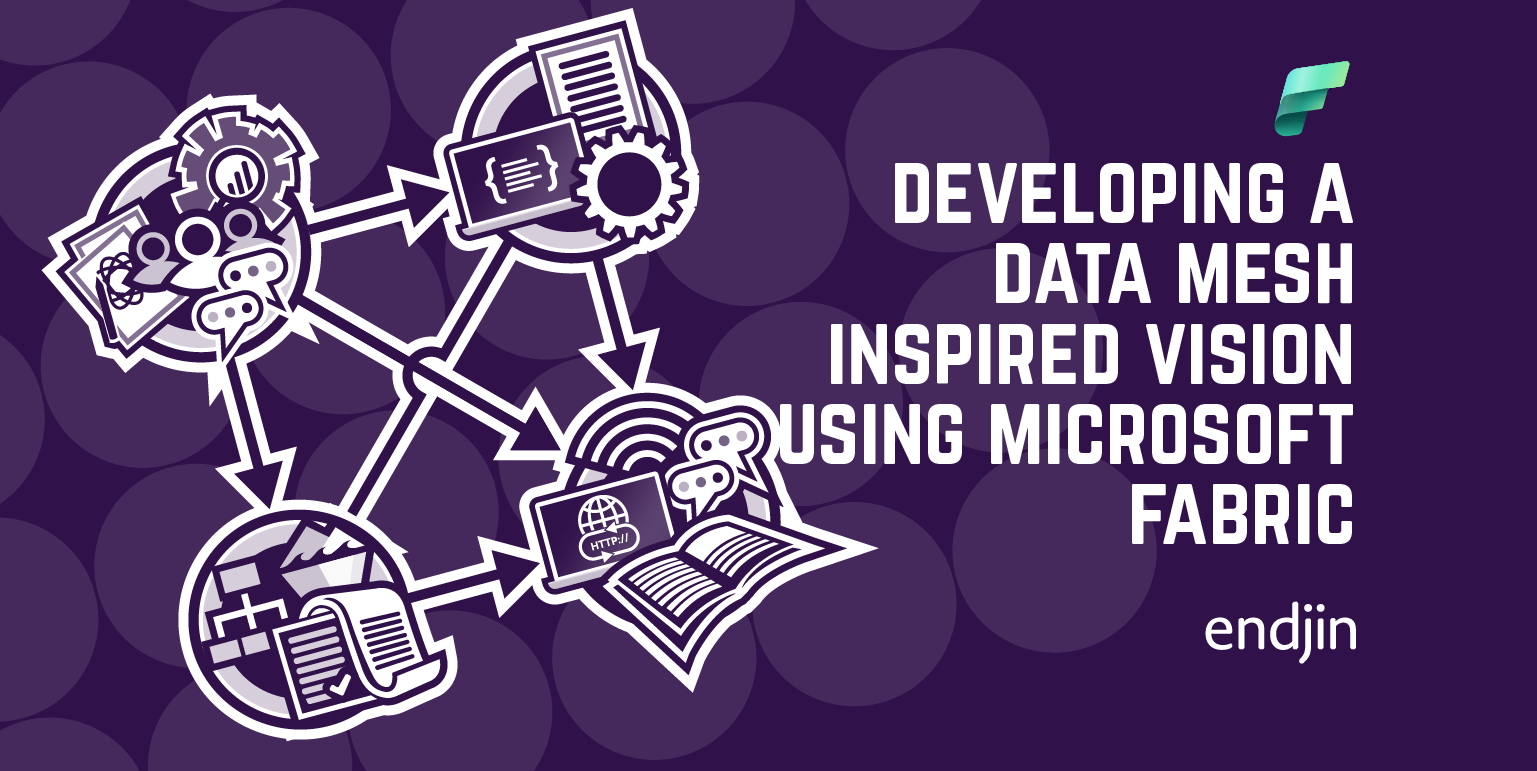
Developing a Data Mesh Inspired Vision Using Microsoft Fabric
Explore Microsoft Fabric, inspired by Data Mesh, for a data-driven strategy. Learn to approach a Data Mesh vision using this powerful tool.
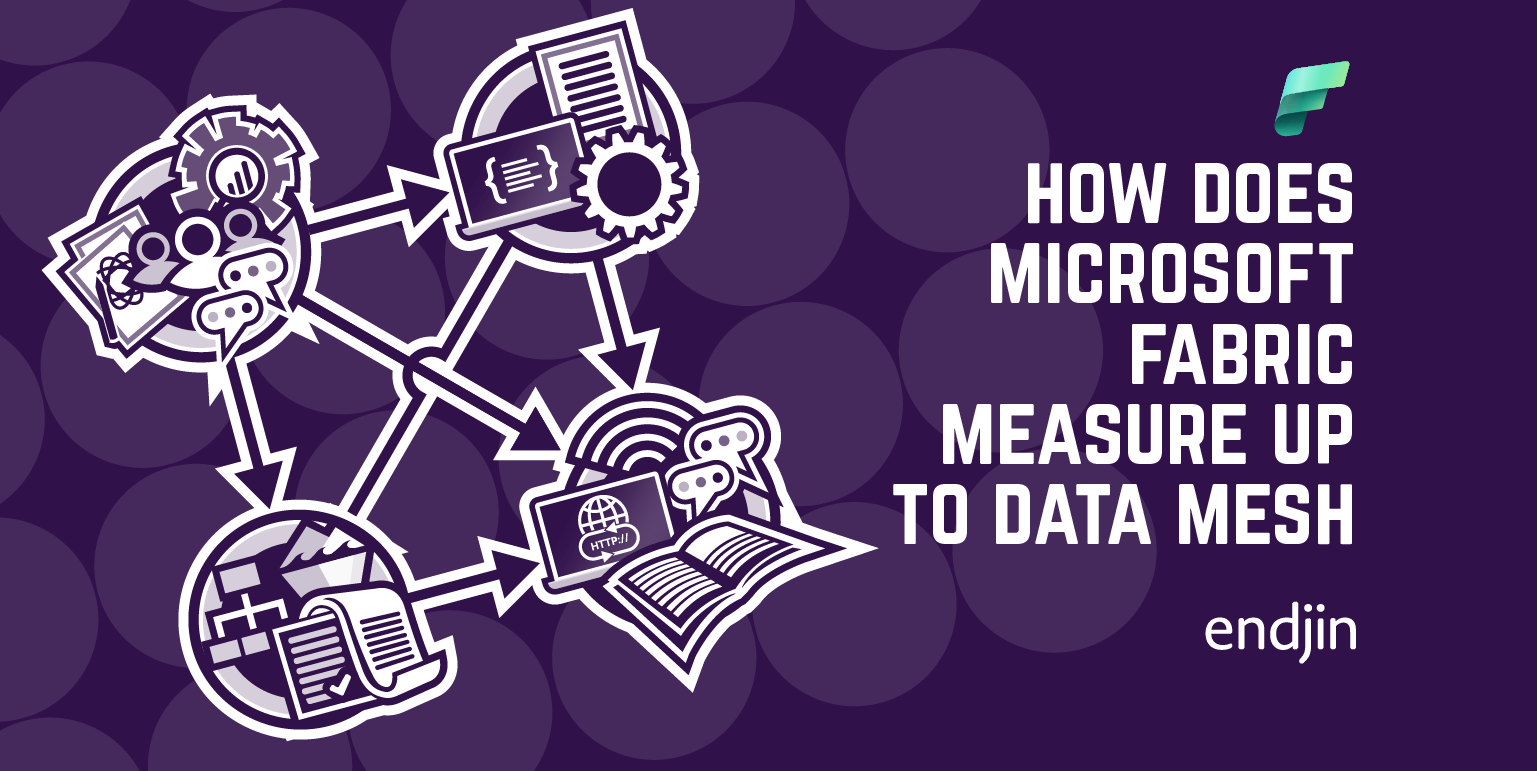
How Does Microsoft Fabric Measure Up To Data Mesh?
Explore Data Mesh's influence on Microsoft Fabric, addressing gaps in data product marketplace, standards, master data management, and governance.
Microsoft Fabric Is A Socio-Technical Endeavour
Creating a successful organisation-wide data and analytics platform isn't just about architecture, schemas and semantic models. It's also about culture, organisational design and people. This blog explores the socio-technical nature of data and analytics and how this should influence your approach to adoption of Microsoft Fabric.
C# Design Patterns - Iterator - The Pattern
Explore the iterator design pattern in C#, its importance in programming, and learn how to implement it.
Architecture Decision Records
Explore the benefits of Architecture Decision Records (ADRs) in technical design, with real-world examples applied to different scenarios.
Copilot: Unleashing AI in Self-Service Analytics
Explore AI-powered self-service reporting with tools like Copilot in Power BI and Microsoft Fabric, balancing benefits and pitfalls.
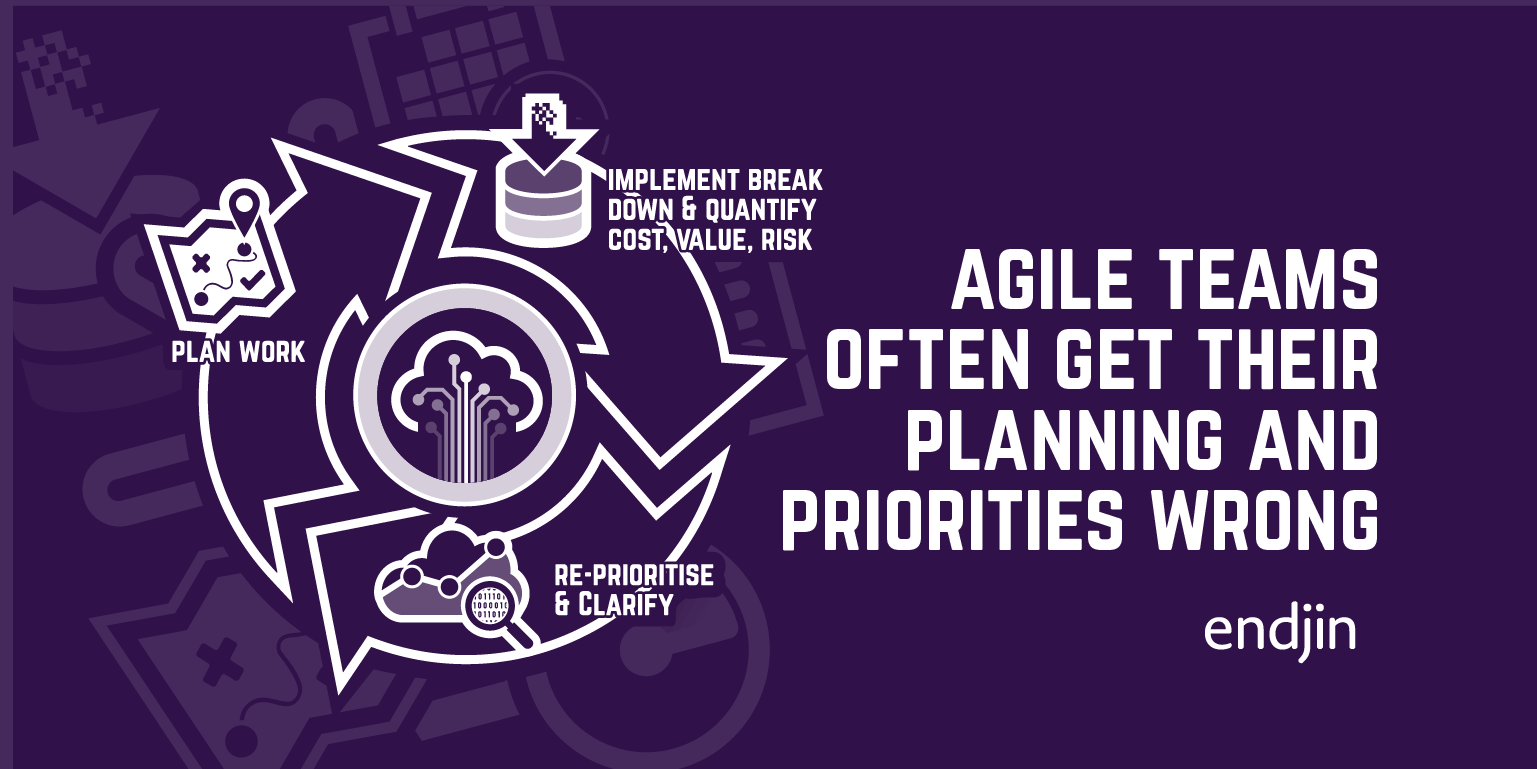
Agile teams often get their planning and priorities wrong
Do you struggle to manage conflicting demands from multiple stakeholders, even when they have agreed about the relative priority of their requests? Apply a budgeting methodology to agile projects for better planning and communication with the team and wider stakeholders.
Microsoft Fabric: Announced
Microsoft Fabric unifies Power BI, Data Factory & Data Lake on Synapse infrastructure, reducing cost & time while enabling citizen data science.
What is OneLake?
Explore OneLake, Microsoft Fabric's core storage for data in Azure & other clouds. Discover its role in Fabric workloads, the OneDrive equivalent for data storage.
Azure Synapse Analytics vs Microsoft Fabric: side-by-side comparison
In this Microsoft Fabric vs Synapse comparison we examine how features map from Azure Synapse to Fabric.
Intro to Microsoft Fabric
Microsoft Fabric unifies data & analytics, building on Azure Synapse Analytics for improved data-level interoperability. Explore its offerings & pros/cons.
Rx.NET v6.0 Now Available
Rx.NET v6.0 is here — the first major release in 2.5 years, supporting .NET 7, .NET 6, .NET Standard 2.0, and .NET Framework 4.7.2
Notebooks in Azure Synapse Analytics
Discover the use of Synapse Notebooks in Azure Synapse Analytics for data analysis, cleaning, visualization, and machine learning.