Browse our archives by topic…
Blog
Browse our blogs activity over the years…
What is Retrieval-Augmented Generation (RAG)?
What is RAG? Learn how RAG combines retrieval, augmentation & generation to ground GenAI responses in your data while reducing hallucinations & improving accuracy.
Polars Workloads on Microsoft Fabric
Polars now ships inside Microsoft Fabric by default. Here's how to use it alongside Fabric's other analytics tools and what that means for your data workflows.
Practical Polars: Code Examples for Everyday Data Tasks
Unlock Python Polars with this hands-on guide featuring practical code examples for data loading, cleaning, transformation, aggregation, and advanced operations that you can apply to your own data analysis projects.
Under the Hood: What Makes Polars So Scalable and Fast?
Polars gets its speed from a strict type system, lazy evaluation, and automatic parallelism. Here's how each piece works under the hood.
Polars: Faster Pipelines, Simpler Infrastructure, Happier Engineers
We've migrated our own IP and several customers from Pandas and Spark to Polars. The benefits go beyond raw speed: faster test suites, lower platform costs, and an API developers actually enjoy using.
How .NET 10.0 boosted AIS.NET performance by 7%
.NET 10.0 has shipped, and for the fifth year running, we benchmarked endjin's AIS.NET library and were very happy to see substantial performance gains, with no extra work required.
Adventures in Least Privilege: When an owner isn't an owner
A troubleshooting journey through Microsoft Entra ID that reveals the subtle but critical distinction between App Registration ownership and Service Principal ownership - and why it matters for least-privilege automation.
Ix.NET v7.0: .NET 10 and LINQ for IAsyncEnumerable<T>
Ix.NET 7.0.0 is now available. Because .NET 10.0 now includes LINQ for IAsyncEnumerable, Ix.NET's System.Linq.Async has had to step back. This post explains what has changed and why.

The Data Product Canvas: The Theory Behind The Canvas
The Data Product Canvas fuses the Business Model Canvas with Data Mesh's 'data as a product' principle, combining visual strategic collaboration with product-minded data ownership.

The Data Product Canvas in Action
See the Data Product Canvas in action with a real-world scenario. Follow along as we work through each building block to design a high-impact, feasible data product for a national garden center chain facing revenue challenges.

The Data Product Canvas: Deep Dive into the Building Blocks
The Data Product Canvas has nine building blocks, best completed right-to-left starting with Audience and Actionable Insight, to keep data products purpose-driven and user-centred.

The Data Product Canvas: Stop Building Data Products That Fail
Turn data initiatives into business success stories with the Data Product Canvas. This practical framework helps teams design data products that deliver real value, avoid common pitfalls, and align with business objectives.
Building data quality into Microsoft Fabric
Data quality issues are one of the biggest silent killers of analytics initiatives. This post explores how to build data quality into Microsoft Fabric from the ground up.
Top Features of Notebooks in Microsoft Fabric
Lakehouse integration, built-in notebook resources, and collaboration features that set Microsoft Fabric notebooks apart from Jupyter and Databricks.
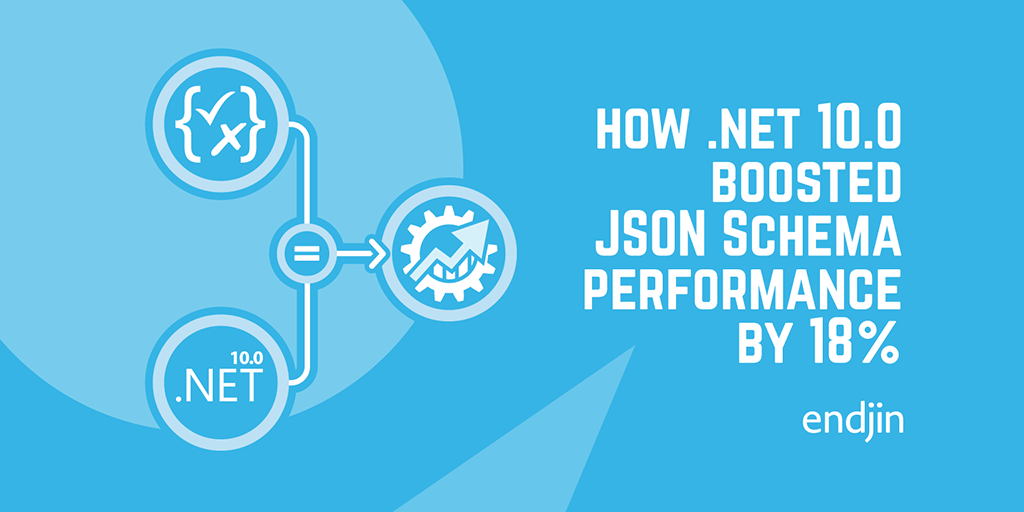
How .NET 10.0 boosted JSON Schema performance by 18%
Benchmarking Corvus.JsonSchema on .NET 10.0 showed an 18% free speed-up on top of .NET 8 and 9 gains — a cumulative 29% boost for LTS upgrades from .NET 8.
Big Data London 2025
AI agents dominated Big Data LDN 2025, but the real story wasn't the technology, it was which organisations could actually deploy it successfully. After five years tracking industry evolution through this event, one pattern emerged clearly: the winners had built their foundations first. For CTOs making platform decisions now, the strategic imperative isn't choosing between innovation and governance; it's recognizing that governance enables innovation at scale.
FabCon Vienna 2025: Day 3
FabCon is a conference dedicated to everything Microsoft Fabric. Day 3's sessions included migration, Databricks, Spark optimisation, and more.
FabCon Vienna 2025: Day 2
FabCon is a conference dedicated to everything Microsoft Fabric. Day 2 featured deep dives into OneLake, Maps in Fabric, and multi-agent AI systems.
Rx.NET v6.1 Now Available
Rx.NET 6.1 is now available, adding three new features: DisposeWith, a TakeUntil overload that takes a CancellationToken, and ResetExceptionDispatchState.
Batch Processing Triggered Pipeline Runs in Azure Synapse
Bursty event triggers in Azure Synapse can fire the same pipeline repeatedly. A batched-trigger orchestrator collapses them into a single coordinated run.

Reliably refresh Semantic Model from ADF or Synapse Pipelines
This post describes a pattern for reliably refreshing Power BI semantic models from Azure Data Factory or Azure Synapse Pipelines.
Reliably refreshing a Semantic Model from Microsoft Fabric Pipelines
This post describes a pattern for reliably refreshing Power BI semantic models from Microsoft Fabric Pipelines.
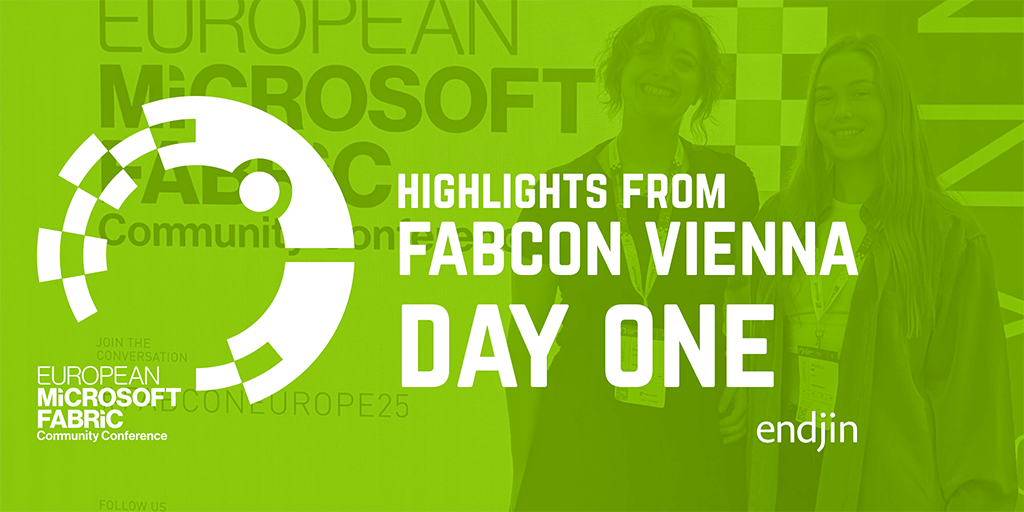
FabCon Vienna 2025: Day 1
FabCon is a conference dedicated to everything Microsoft Fabric. Day 1 was mostly focused around the hundreds of new feature announcements.
Supercharge Your Dev Containers on Windows
Running VS Code Dev Containers on Windows? Clone repos inside WSL filesystem to eliminate I/O bottlenecks and boost performance dramatically.

Guest Blog Post: Hello World! I'm Ray and I'm doing work experience.
Ray, a Year 10 student, spent a week at endjin doing work experience.