SQLBits 2026: A Conference Recap


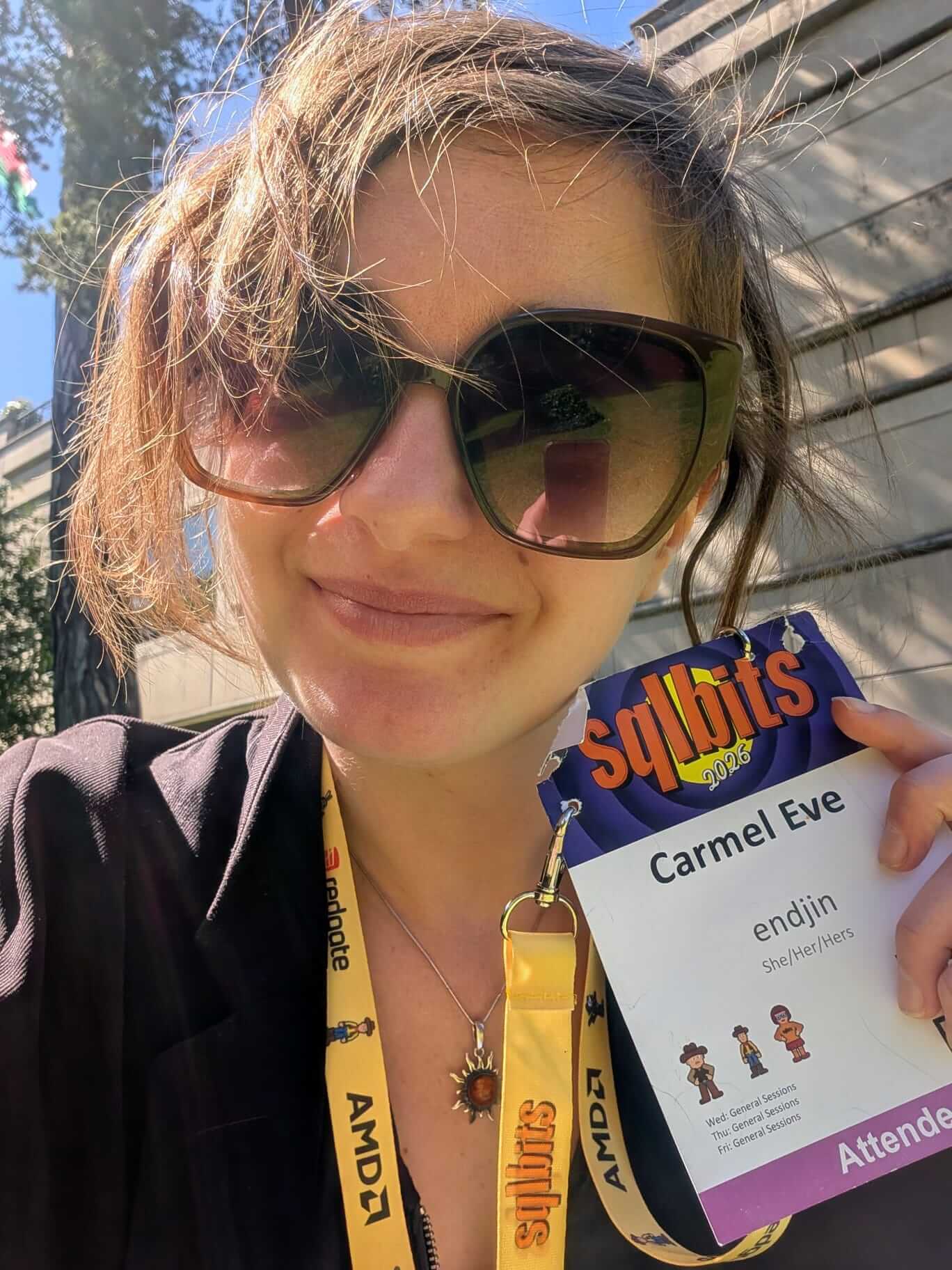
I recently attended SQLBits 2026 at the ICC Wales - one of the largest data platform conferences in Europe. In the run-up to the conference, I was part of the SQLBits DEI (Diversity, Equity and Inclusion) panel, where we worked on various initiatives to make the event more inclusive - from the "One SQLBits, Many Nations" map in the community hub, to non-sensory food options, all-day snacks, and the "Find Your People" networking sessions. It was brilliant to see a lot of this come together on the day (and especially lovely to see so many kids and parents at the Code Club sessions on the Saturday!).
Across four days, I went to sessions on everything from the SQL Server roadmap and DAX deep dives, to ingesting SharePoint data into Fabric, home automation, inclusive team building, and avoiding burnout. It was a packed few days, and I came away with a lot of new knowledge and plenty to think about.
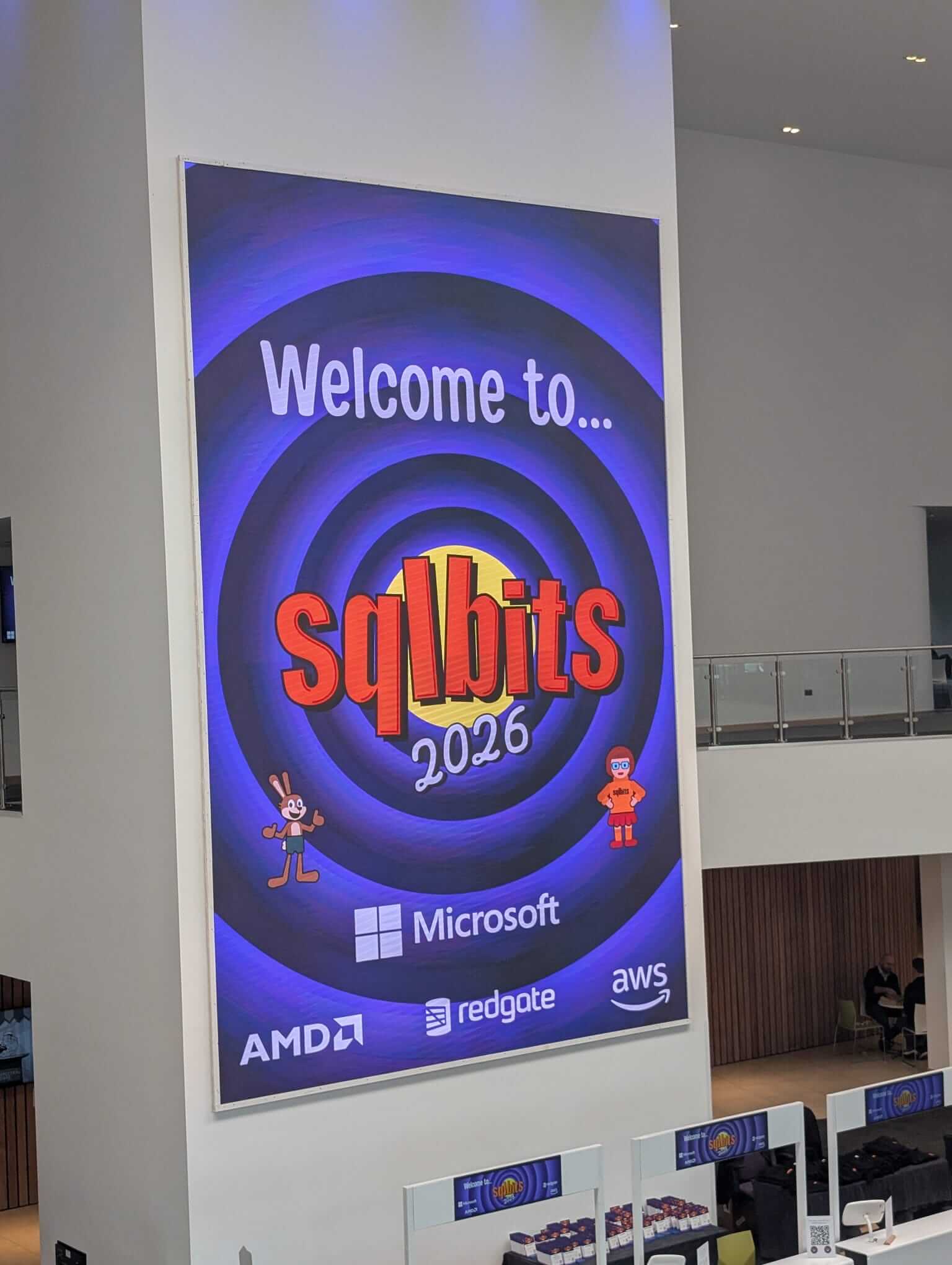
This post gives an overview of the sessions I attended. I'll also be writing some deeper technical posts on the topics that I found most interesting!
Day 1
Keynote - The SQL Roadmap
Priya Sathy, Shiva Gurumurthy, Bob Ward, Anna Hoffman
The conference kicked off with a Keynote focused on the SQL Server roadmap. There were a lot of announcements about migrating to Azure SQL Managed Instance, including cost estimation tools, the ability to check the effect of changes via lineage, and the fact that you can now manage memory and performance independently. They also touched on VMs - updating to the new series can provide huge throughput increases for analytics, even with smaller VMs.
Anna Hoffman did a couple of great demos. The first used GitHub Copilot to analyse why a stored procedure was running slowly. The second showcased the notebook experience in the mssql VS Code extension, where you can create reports and export them for sharing.
There was also a section on SQL Database in Fabric, highlighting how it's natively integrated into OneLake, autonomous, secure, and optimised for AI. Anna demonstrated using the mssql extension in VS Code whilst connected to Fabric to make changes to a database, and then showing how those changes were reflected in the Fabric UI and could be committed to Git. It's clear that the developer experience for SQL in Fabric is getting a lot of attention.
Finally, there was a section on monitoring in SQL and database agents (all still in preview). This included estate-level triage, asking Copilot for insights, and agents putting alerts straight into Teams and tagging relevant people - a promising step towards more proactive database management.
Variable Libraries in Fabric
Kevin Arnold
Next up was a session on Microsoft Fabric variable libraries - originally scheduled as a 20-minute slot, but they let him continue into the break and he ended up speaking for around 45 minutes (which was a good thing, as there was plenty to cover!).
Variable libraries are the mechanism intended for managing environment-specific configuration in Fabric. The session covered what they are, how they work across different Fabric item types, and some best practices for using them safely.
Watch out for a new post on best practices when using variable libraries!
Microsoft Fabric and the Mess of SharePoint
Laura Graham-Brown
Let's be honest - there's no escaping SharePoint. This session from Laura Graham-Brown explored the various options for ingesting SharePoint data into Microsoft Fabric. She was a great presenter and covered a lot of ground, walking through the practical trade-offs of each approach.
Again, keep an eye out for an upcoming post which will go through this in more detail.
Conversational Analytics at Lloyd's Banking Group
Andrew Herman, Sean Hughes
This was an interesting session about Lloyd's Banking Group's journey from traditional reporting to "GenBI" (Generative BI). The scale involved was impressive - over 100,000 reports, 3 million interactions per month, 27,000 workspaces, and 65,000 active users.
As part of their journey, they did a PoC to prove whether switching from traditional reports to conversational AI would help with the classic challenges of slow insights, inefficiency, and data silos.
What I found most interesting was less the AI angle itself, and more the broader transformation approach they described: proving value early, measuring impact quantitatively, winning senior sponsorship, building capability across the organisation, establishing a single source of truth for key datasets, and baking in CI/CD and governance from the start.
These are solid data transformation principles regardless of whether AI is involved - though the AI angle certainly helps with getting that initial buy-in and excitement!
Fabric Admin Panel
I attended a Fabric admin panel session hoping for discussion around workspace management and change management best practices. It ended up being more of a Q&A driven by the audience, which was mostly made up of Fabric administrators.
A few interesting things came up:
- The Fabric team are considering workspace-level tags (high/medium/low priority), where jobs can then be prioritised accordingly.
- They also recommended building your own Fabric capacity metrics app - which, reading between the lines, suggests the built-in monitoring story still has room for improvement.
- They heavily implied that per-operation metrics are coming, which would be a welcome addition!
There was also an interesting discussion about governance versus usability. The general advice was to lean towards openness and invest in education, with the reasoning being that overly restrictive policies tend to backfire - users will find creative workarounds. (The example given was users screenshotting Power BI reports and extracting data from the screenshots after exports were disabled!)
Shine Bright Like a Star, Without Burning Out!
Gloria Georgieva Clare
As I always try to at conferences, I made sure to attend at least one less technical talk. Gloria Georgieva Clare gave an open and personable session on avoiding burnout, and I'm really glad I went.
She talked about the concept of having four "hobs" - health, social, work, and hobbies - and how you can't have all four firing at full power at any one time. She recommended a few books: The Burnout Society, Fair Play (about unseen, unpaid domestic labour), and Solve Your Stress Cycle.

One of the things that resonated with me most was the idea of defining personal "drivers and guardrails" - concrete commitments like "I want to meet a friend after work once a week" or "I shouldn't be eating lunch at my desk". She also made the important point that just because a stressful situation has ended, doesn't mean the effects of it instantly go away.
I think reflecting on these things semi-regularly is really valuable, and a conference is a good prompt for doing it.
Day 2 - Optimising DAX Queries (Full-Day Workshop)
(Alberto Ferrari - SQLBI)
Day 2 I attended a full-day training workshop with Alberto Ferrari on optimising DAX queries. I learnt a huge amount about how the underlying engines that power Power BI work, and how the in-memory database (VertiPaq) is optimised. We went through real examples of slow queries and why they were slow - often for reasons I would never have known about beforehand.
The workshop covered everything from how VertiPaq stores data using column-oriented storage and various encoding techniques, through to how the formula engine and storage engine work together when executing DAX queries, and practical techniques for identifying and fixing performance bottlenecks.
Watch out for an upcoming series, which will run through this in much more detail.
Day 3
Day 3 was a bit more relaxed. One of the nice things about SQLBits is that the conference social events (in this case, a pub quiz the night before) are actually a good way to meet people. I spent the morning chatting to various people I'd met, which is probably as valuable as any session.
What an Automaton Nerd Learnt by Automating Their Home
Rob Sewell
This was a fun one. Rob Sewell talked about how he'd automated his house using Home Assistant - an open-source home automation platform. He had a network of hundreds of devices all connected via a local network, which was pretty impressive.
What I liked most about this talk was his point that even when you're doing something for fun at home, proper engineering practices and requirements gathering still matter. He had some great examples of what happens when you skip them - including a security setup designed to alert them if someone was in the garden after dark (via a foghorn noise and all the lights turning on), which worked perfectly until they realised they'd forgotten to account for the cat.

People first: building strong, inclusive data teams that actually deliver
Hollie Whittles
This was a 20-minute session, and while it was fairly high-level, there were some points that stuck with me.
Hollie Whittles gave some statistics around how communication is almost always what causes projects to fail, and talked about steps they'd taken to improve it within their team - including anonymous feedback mechanisms and surveys to better understand working styles.
There was a section on neurodiversity that I found particularly interesting. An estimated 30% of people in tech are neurodiverse, but only 16% say there's ever been a conversation about it in their workplace. She highlighted some common workplace practices that can unintentionally disadvantage neurodiverse team members:
Meetings without agendas - people who need more prep time are disadvantaged before the meeting has even begun. Only giving feedback in group settings - many people find public criticism destabilising and need privacy to process constructively. "Open door" policies - which only work for people who are already comfortable stepping through the door.

She also talked about recognising how different team members respond when pressure rises - some withdraw and go quiet, some escalate everything to urgent, and some people-please and agree to everything until they burn out. Being able to recognise these patterns in your team is a useful skill.
Get Creative with Power BI - Making Core Visuals Shine
Valerie Junk
This session was about visualisation and report design in Power BI. A lot of it was fairly straightforward, but there were a few practical tips I picked up.
On tables specifically: use data bars (but not for every column), only highlight what's really important rather than colour-coding everything (just the top and bottom 3, perhaps - I'm definitely guilty of over-colouring), and grey out less important information. Though it's worth noting that heavy conditional formatting can be terrible for accessibility, so having an option to toggle it off is a good idea.
On that note, she showed a neat technique for toggling conditional formatting on and off using a button slicer, without resorting to bookmarks (which, in my experience, can be a bit of a nightmare). The approach is:
- Create a table with two values: "Formatting" and "No Formatting"
- Add a button slicer connected to that table
- Update your conditional formatting rules to check
SELECTEDVALUEof that column
Simple, but effective - and avoids the fragility that comes with bookmark-based approaches.
Day 4
Day 4 was the final day, and featured two talks from my colleague Barry Smart.
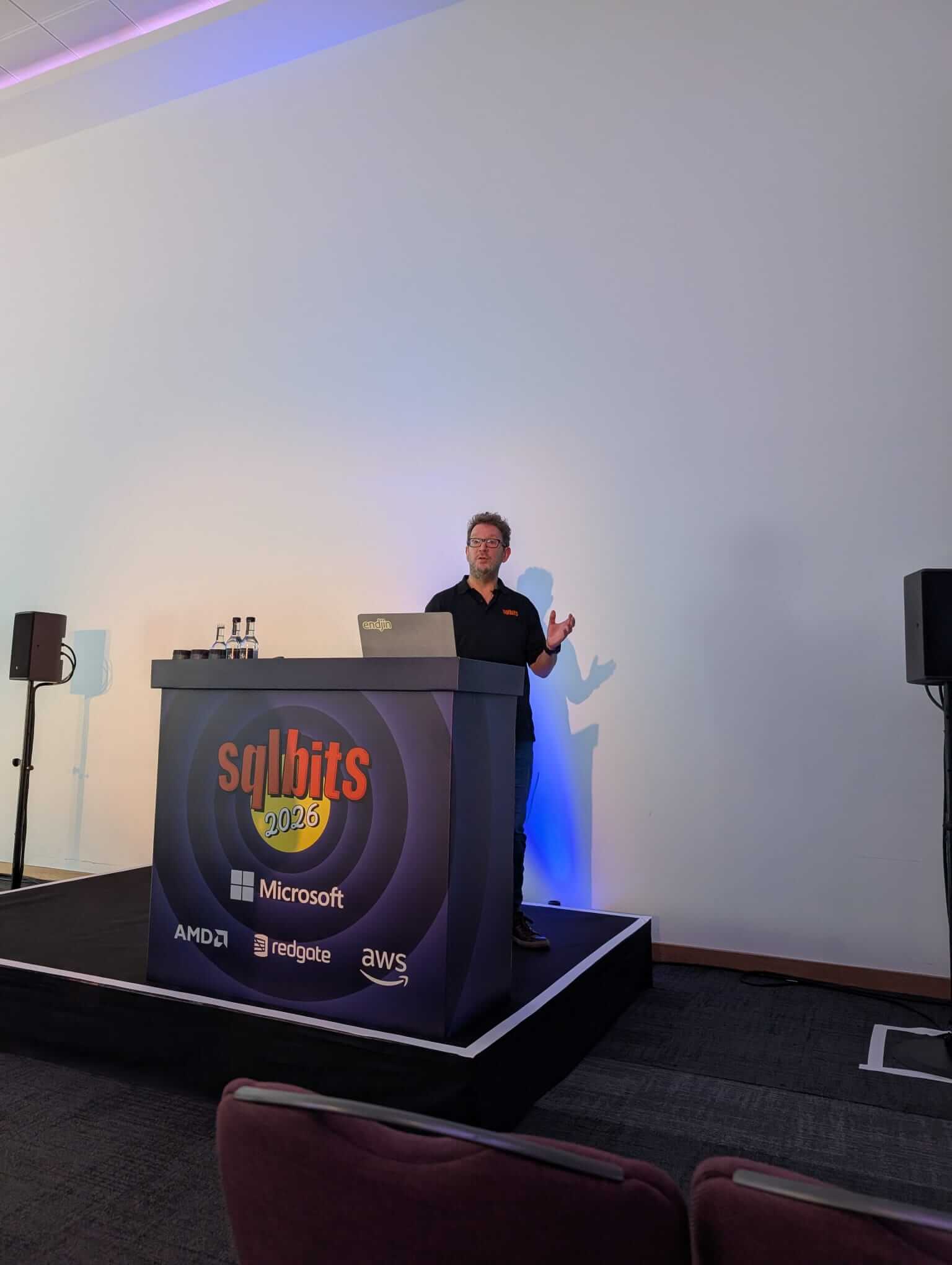
Spark Unplugged: How In-Process Analytics Is Making Distributed Computing An Expensive Investment
(Barry Smart - endjin)
Barry's first talk challenged the assumption that distributed computing (Spark, in particular) is always the right tool for analytical workloads. With in-process analytics engines like DuckDB and Polars becoming increasingly capable, there's a growing argument that for many workloads, you can get comparable (or better) performance without the overhead and cost of a distributed compute cluster. If you're interested in this topic, keep an eye out for a follow-up post!
No-Compromise Data Apps: Why Streamlit is the Missing Piece in Your Analytics Stack
(Barry Smart - endjin)
Barry's second talk focused on Streamlit - a Python framework for building interactive data applications. The session made the case that Streamlit fills an important gap in the analytics stack: the space between a Jupyter notebook (great for exploration, not great for sharing) and a full web application (powerful, but heavy to build). If you're a data team looking to get interactive tools into the hands of business users without a full frontend development effort, it's well worth a look!
Overall
SQLBits is a well-run conference with a good mix of deep technical content, practical sessions, and softer topics around wellbeing, inclusion, and career development. I came away with a lot of things to think about and try out - which is about all you can ask from a conference, really.
If you're working in the data space - whether that's SQL Server, Fabric, Power BI, or anything in between - it's well worth considering. The 2026 Cartoon theme was a nice touch too!